
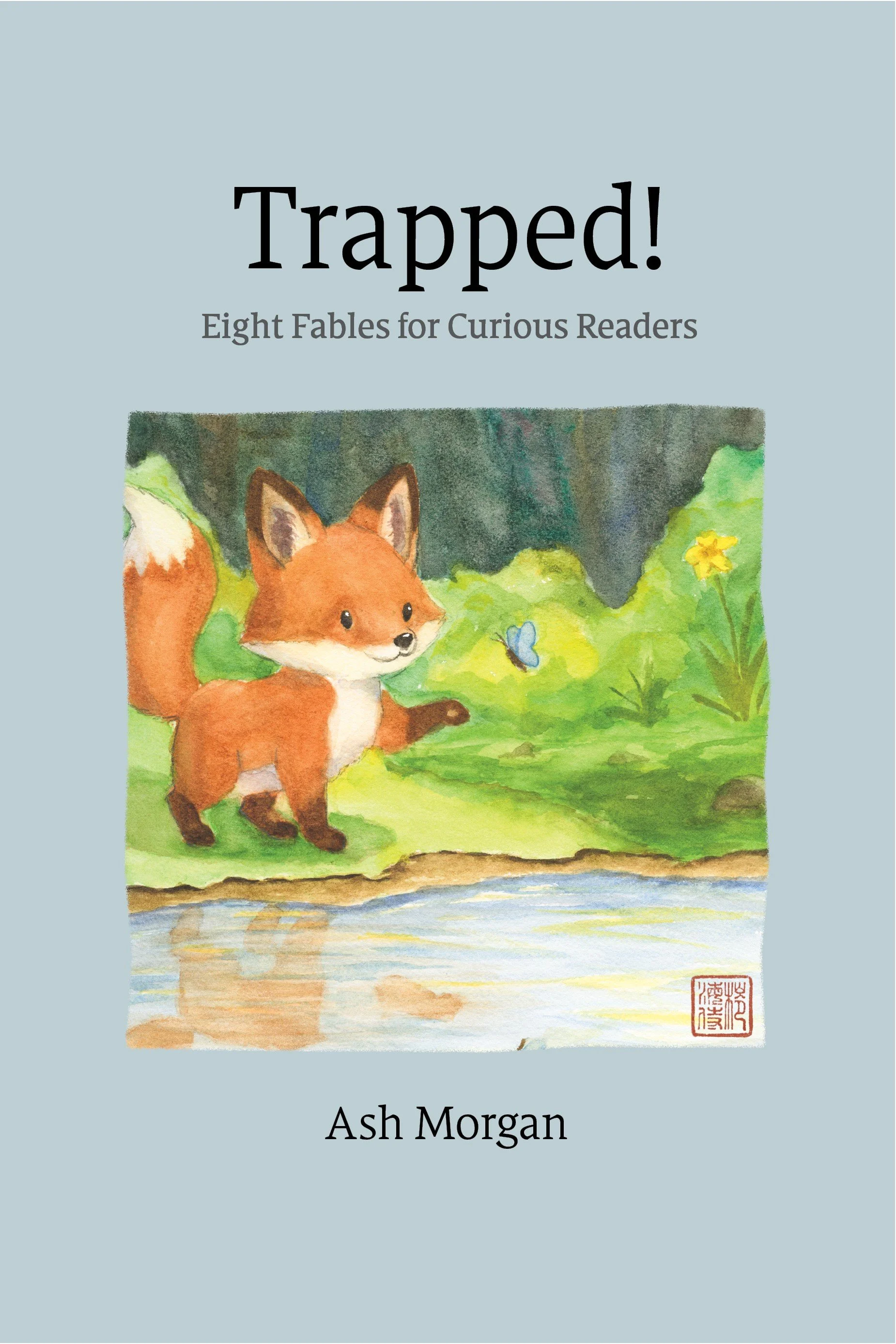
Fables that trust you to find the lesson yourself.
Bunny wants some tasty flowers. Spider just wants more flies. Squirrel is certain tomorrow's haul will make up for today's shortfall. In Trapped!, curious creatures chase what they want and walk straight into the invisible patterns that snare us all.
These aren't tidy fables wrapped with a moral bow at the end. Each story stops at the moment of being stuck and leaves the rest to you. Drawn from the systems-thinking archetypes in Peter M. Senge's The Fifth Discipline, the tales quietly reveal the traps we fall into again and again: chasing a delayed result, treating symptoms instead of causes, lowering the bar one reasonable step at a time, escalating a rivalry no one wins.
Hand-illustrated in watercolor and written for ages 4 through 104, Trapped! works as a bedtime read, a classroom spark, or a mirror for grown-ups who recognize a little too much of themselves on the page. It's also a natural fit for social-emotional learning (SEL): instead of naming feelings or handing over rules, the stories grow self-awareness, empathy, and thoughtful decision-making by letting readers recognize their own patterns in the characters. A closing afterword and a complete Facilitator's Guide—with discussion questions tiered for young children, older kids, teens, and adults—turn every fable into a conversation for families, educators, therapists, book clubs, and teams.
Read one aloud. Sit with the silence after. Then ask the only question that matters: have I ever been in this story?
Available 8/3 on Amazon, Barnes & Noble, Bookshop.org, and other booksellers worldwide.
Read the first fable below!
From Trapped!: Eight Fables for Curious Readers.
Copyright © 2026 by Ash Morgan.
Reprinted with permission of Wynoodle Publishing.
Flowers!
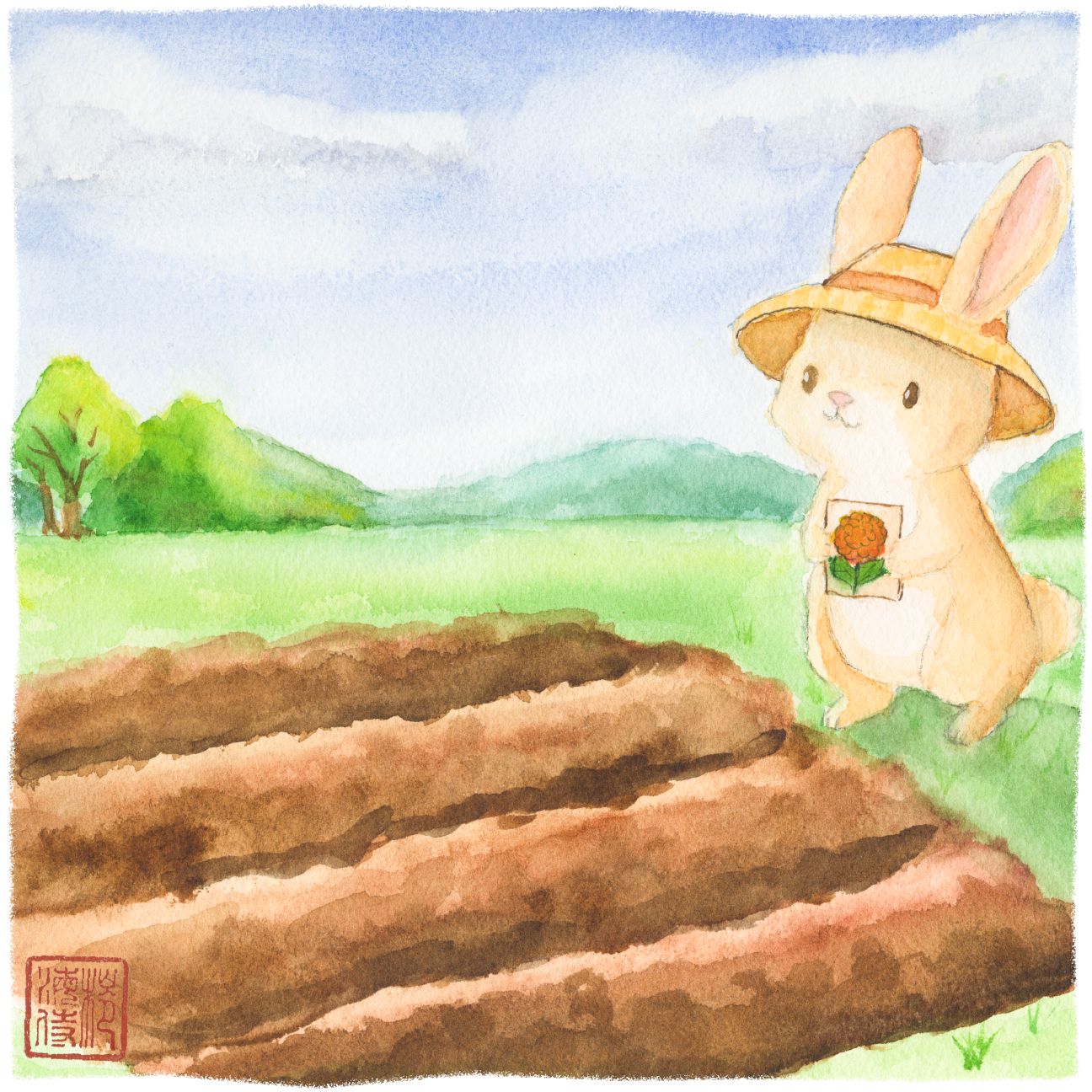
On the first day of spring, Bunny decided to plant some flowers.
“Some tangy marigolds will be delicious,” said Bunny.
Bunny tilled the soil and planted the seeds in four neat rows.
A week later, however, none of the seeds had sprouted.
“Oh, no flowers?” said Bunny. “I’ll plant some spicy monk’s cress, too!”
When Bunny checked the garden a week later, the marigold seeds had finally sprouted into short stems with tiny leaves.
“Wonderful!” exclaimed Bunny, clapping their paws together. “But this won’t be nearly enough! I’ll plant some honeyed clover, too!”
The following week, Bunny checked the garden: while the marigolds were bushier, they were still quite small, just a few inches tall. But now, the monk’s cress had sprouted and would soon be as tall as the marigolds!
“I can’t wait to nibble on these tasty flowers!”
The next week, everything was green and growing: the marigolds and monk’s cress were twice as big and tiny clover leaves had formed now, too.
“Oh, I can’t wait!”
When another week had gone by, not much had changed. The marigolds and monk’s cress were only slightly bigger, and the clover was still only an inch tall.
“Won’t be long now!” said Bunny, paws rubbing together.
But after another week, everything was turning yellow.
“Oh no! Maybe I shouldn’t have planted that clover!” gasped Bunny and began to pull out all the clover, leaving only the marigolds and the monk’s cress. “Whew! That should fix things.”
Bunny checked the garden a few days later: both the marigolds and the monk’s cress still looked yellow and hadn’t grown at all.
“Was even the monk’s cress too much?” wondered Bunny. “Best to just leave the marigolds, then,” Bunny decided and yanked out all the monk’s cress.
Bunny checked the marigolds the next day: their leaves had all wilted. Some had even turned brown!
“Wait, why don’t I have any flowers?” cried Bunny.
Discussion Questions
Systems Pattern: Balancing Process with Delay
Ages 4–7
Have you ever felt like Bunny?
Why did Bunny keep planting more seeds?
What could Bunny have done differently?
Ages 8–10
What was actually happening each week in Bunny’s garden?
When have you “pulled a Bunny” and given up on something too soon or added too much too fast?
Unlike a story, we can’t rewind real life. How might you notice that you’re about to follow Bunny’s path?
Ages 11+
How do we know when to wait versus when to act?
Where else do we encounter natural delays between doing something and seeing the results?
What do we need to keep in mind, so that the seeds we plant will turn into flowers?